66 years ago
33 years ago
Now
+42°Cmax+30ºCmin+24°C

 Hajj and Umrah in Data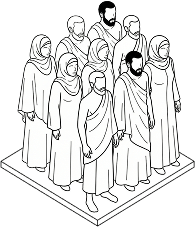
At peak moments, crowd density here can reach nine people per square meter, with pilgrims moving shoulder to shoulder. Here’s what it takes to manage a gathering on this scale, and how movement and safety are maintained around the Grand Mosque.
Let’s start with the basics. What is Hajj? Simply put, it is a sacred duty for every Muslim who can afford the journey and is healthy enough to make it. For most pilgrims, it is a once-in-a-lifetime obligation. Umrah, a voluntary pilgrimage that shares many of the same rites, can be performed at any time of year, and as many times as a person wishes.
Saudi Arabia treats the Hajj season as a top national priority, deploying infrastructure, personnel, and technology on an extraordinary scale. Under Vision 2030, the Kingdom is targeting more than 30 million worshipers annually, backed by continuous investment in crowd management, transport, and health systems.
So, how do you manage Hajj and Umrah at this scale? How do you move millions of pilgrims through Holy Sites without turning every entrance into an endless queue? And the bigger question is how to protect safety and order without disturbing the atmosphere of devotion that defines the pilgrimage?
The answer lies in careful planning, precise execution, and attention to detail, especially for Umrah, when pilgrims visit the Grand Mosque throughout the year. The system begins before pilgrims arrive, with visa procedures, flight coordination, airport movement, dedicated buses, and accommodation organised around fixed schedules. On the ground, the work focuses on keeping movement smooth, guiding pilgrims through clear routes, and preventing crowding at key points.
By 2100, parts of the Arabian Peninsula could warm by up to 9°C.
In some years, Hajj falls in the hottest weeks of the year, with temperatures in Makkah reaching 45–48°C. This happens because Hajj follows the Islamic lunar calendar, which is about 10–11 days shorter than the solar year. As a result, the pilgrimage dates shift earlier each year and complete a full circuit through all four seasons every 33 years. One cycle takes Hajj into midsummer, the next pulls it back into spring or winter, and then the pattern repeats.
By 2100, parts of the Arabian Peninsula could warm by up to 9°C.
Cooling technologies have made conditions more comfortable for millions of people.
So what do you do when the weather refuses to ease up? You stop treating heat as background and start treating it as a design constraint. Routes are planned with shade in mind. Surfaces are chosen for what they do under direct sunlight. Waiting areas, tents and walkways are built around the basic question of how long people will be exposed and how much relief you can provide along the way.
Cooling technologies have made conditions more comfortable for millions of people.
That is the logic behind the cooling measures now spread across the sites. They’re not add-ons or nice-to-haves. They are part of how Hajj is engineered: small interventions, repeated at scale, to make the environment more manageable for millions of people moving through it.
To cope with extreme heat, Saudi authorities have built cooling into almost every aspect of Hajj. Across the sites, misting systems, shade structures and air-conditioned tents reduce heat stress, while more than 84,000 square meters of roads in Arafat are now paved with light-reflective materials that bounce back up to 40% more sunlight and lower surface temperatures by around 12°C.

Made by Méridien
Made by Méridien
Desert coolers cut energy use by about 35% in the Mina tent city.
In Mina’s tent city, Hajj authorities have installed more than 50,000 desert coolers — the world’s largest evaporative-cooling setup. Unlike refrigerated air conditioning, this type of cooling is gentler on skin, eyes and airways. The upgrade also cut energy use by about 35%.
Desert coolers cut energy use by about 35% in the Mina tent city.
Another notable upgrade is a 4-kilometer cooled pedestrian path leading to Mount Arafat. Built with advanced paving that reduces vibrations, it makes the route smoother and more comfortable for people with disabilities and those traveling with them.
And in the heart of Makkah, Saudi authorities have installed 244 misting fans in the Grand Mosque courtyards. Using fog-cooling, they absorb heat from the air and can lower temperatures by around 6°C.
In recent years, Hajj has undergone a major digital shift. One of the clearest examples is the Balady platform, designed around geospatial data and interactive maps to help pilgrims move between the Holy Sites with greater ease. Today, more than 550,000 Hajj and Umrah pilgrims in Makkah use the app.
Balady+ offers Saudi Arabia’s first interactive 3D map, with detailed views of key landmarks such as the Grand Mosque and the Jamarat Bridge. It goes beyond “turn left, turn right” by marking entrances and exits, so walking routes lead to the correct access point. The interface also switches between day and night modes for clearer visibility.
During Hajj, conditions can change quickly. Balady+ runs on a 40-minute update cycle and reflects sudden road closures and traffic reversals through automated integration with the Royal Commission. It’s designed to work at pilgrimage scale and at human scale: it can guide pilgrims to a specific tent number within Arafat, Mina and Muzdalifah, backed by an updated directory of more than 11,000 landmarks, including hospitals, historical sites, water stations, restrooms, and train and bus stops.

In the next edition of Balady Atlas, we will take a closer look at the Hajj journey.